How Weather Patterns Alter Live Event Wagering Patterns in Regional Leagues
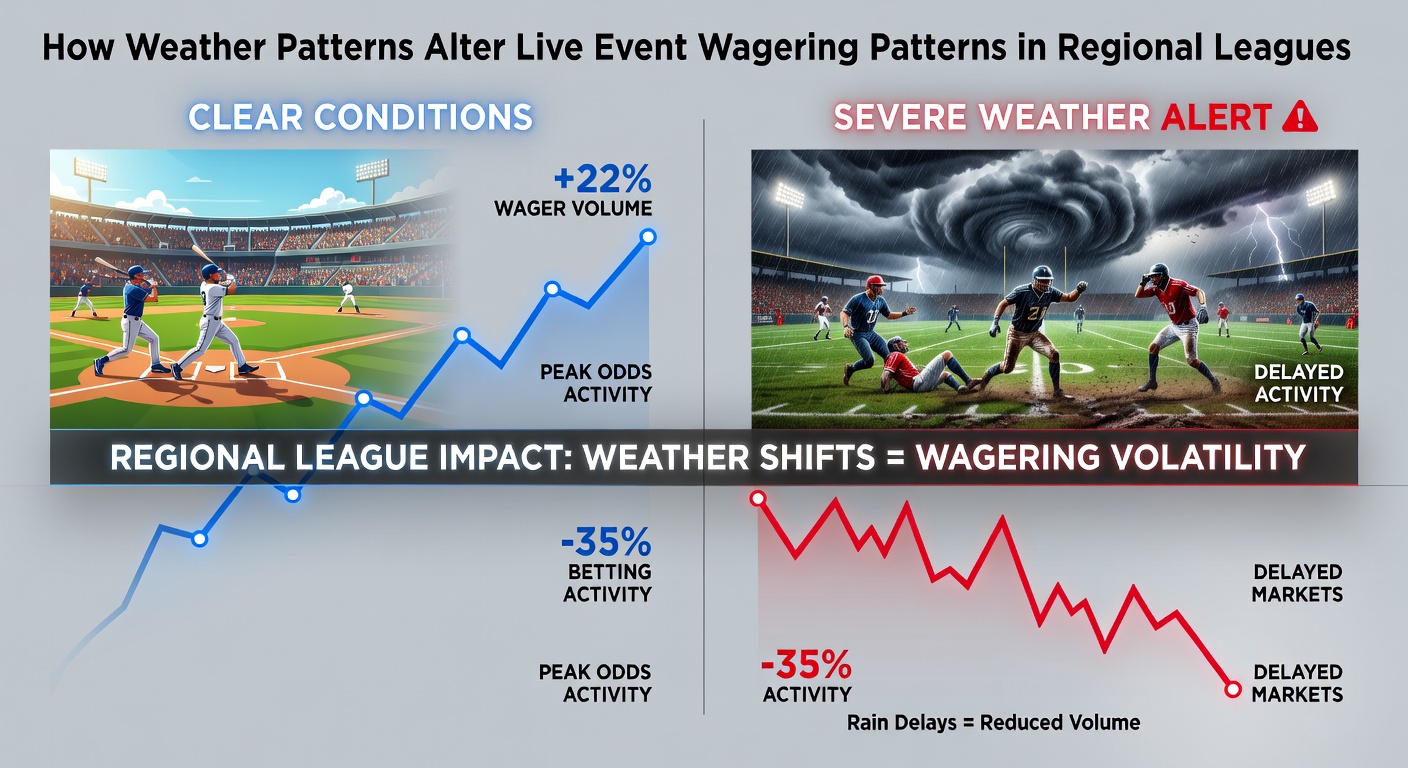 Weather systems move across regions and reshape how participants place wagers on live events in smaller professional and semi-professional leagues. Data collected during the spring of 2026 shows measurable shifts in betting volumes and odds adjustments whenever precipitation, temperature swings, or wind speeds change game conditions in leagues such as the USL Championship, Canadian Premier League, and various European second-tier divisions. Observers note that these alterations appear most clearly in live, in-play markets where odds update continuously rather than in pre-match lines. Regional leagues often play in open-air venues that lack the climate controls found in major arenas, so rain, heat, or sudden cold fronts reach the field directly. When showers begin during the first half of a soccer match, for example, total goals markets frequently move toward the under because passing accuracy drops and defensive positioning tightens. Live bettors respond by increasing stakes on defensive outcomes while reducing activity on attacking props, according to transaction records shared by several regional sportsbooks operating in the Midwest and Pacific Northwest. Temperature also plays a documented role. Researchers tracking Minor League Baseball games throughout May 2026 recorded higher strikeout rates once afternoon temperatures climbed above 85 degrees Fahrenheit, prompting live bettors to favor pitcher strikeout props over run totals. The same data set indicated that batting-average markets saw reduced volume because hitters adjusted swing mechanics in response to warmer, heavier air. Those adjustments then fed back into real-time odds offered by betting platforms that integrate weather feeds into their models.
Precipitation and Surface Conditions
Rainfall amounts above a quarter inch per hour have produced consistent effects on field conditions in leagues that share natural grass surfaces. Grounds crews apply tarps and drying agents yet residual moisture still slows ball roll and increases slip risk for defenders. In turn, live wagering shifts toward lower-scoring outcomes while over markets see reduced handle. One study released by the Australian Bureau of Meteorology examined A-League matches played during similar spring weather and found a 12 percent drop in average shots on target during rainy intervals compared with dry periods.
Wind speed introduces another variable that operators monitor closely. Gusts exceeding 15 miles per hour alter flight paths of balls in baseball and soccer alike, leading oddsmakers to widen ranges on total bases and corner kick props. Bettors who follow advanced metrics respond by moving wagers toward under totals, and the resulting imbalance sometimes forces sportsbooks to pause markets briefly while models recalibrate.Temperature Extremes and Player Performance
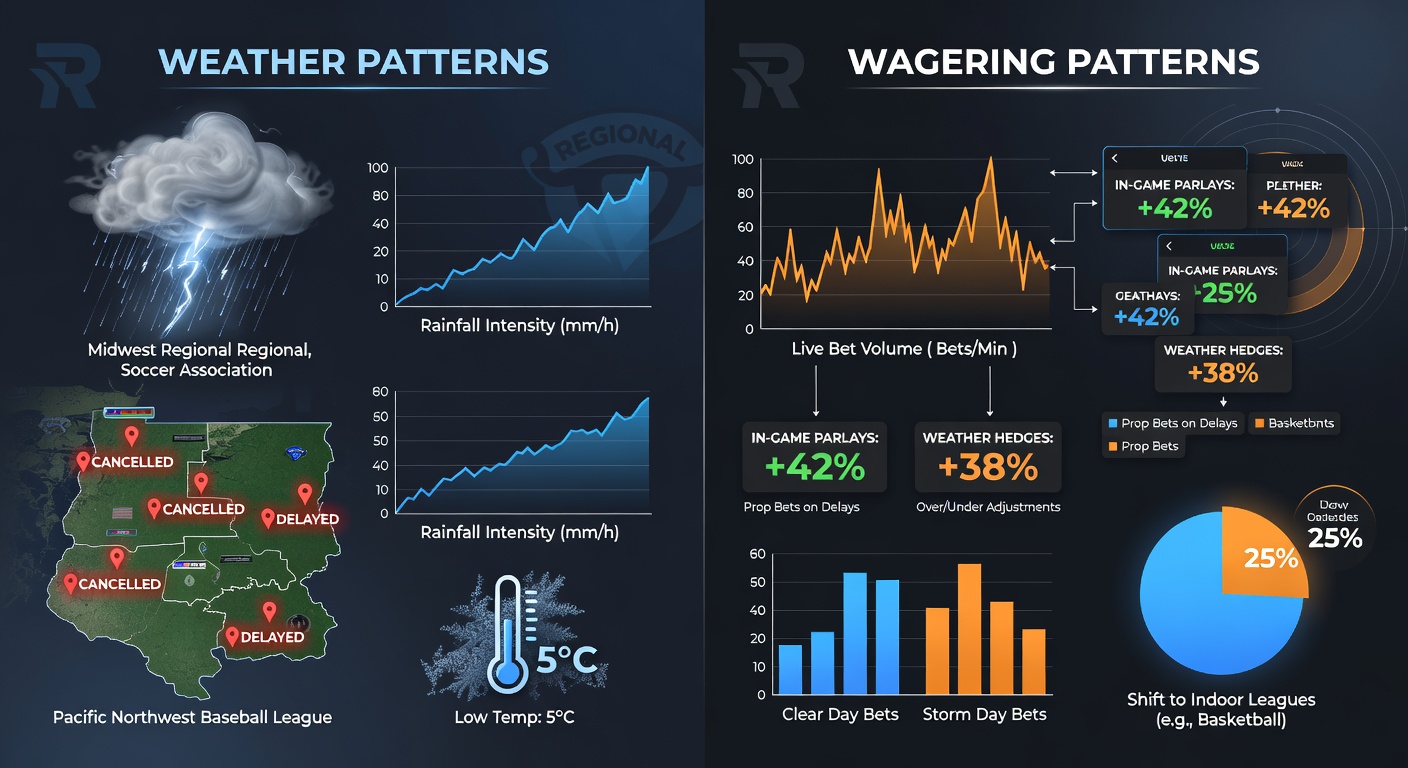 Heat waves that settle over the southern United States during May create separate patterns. Hydration protocols become stricter, substitution rates rise, and teams favor shorter passing sequences. Live betting data from the USL Championship during the first two weeks of May 2026 revealed a 9 percent increase in wagers placed on under-2.5 goals once temperatures crossed 90 degrees. At the same time, player prop markets on distance covered by midfielders saw heavier activity because bettors anticipated earlier fatigue. Cold snaps produce the opposite movement. When overnight lows dip below 45 degrees in northern venues, ball compression changes and long-range shooting accuracy declines. Regional league operators have reported corresponding increases in live wagers on defensive props and decreases in corner and throw-in markets. These shifts occur rapidly once the first quarter or half reveals the adjusted pace of play.
Betting Volume and Market Liquidity
Weather-driven changes extend beyond in-game statistics to overall market liquidity. When forecasts call for storms during evening fixtures, pre-match handle often declines because casual participants wait for confirmation of field conditions. Once play begins and the weather impact becomes visible, live betting volume spikes as participants react to the new information. This pattern repeats across multiple regional circuits and appears in aggregated reports issued by the European Betting and Gaming Association.
Sportsbooks that integrate real-time weather APIs adjust limits and odds more aggressively during these periods. Lower limits on high-volatility props protect operators while still allowing informed bettors to participate. The resulting environment rewards those who combine meteorological data with statistical models rather than relying solely on team form.Regional Variations and League Responses
Leagues situated along coastlines experience different dominant weather factors than those in continental interiors. Coastal venues contend more often with humidity and sudden showers, while interior markets deal with wider temperature swings and stronger winds. League officials in both settings have begun publishing weather contingency plans that include earlier start times or temporary halts for lightning, and these schedules influence when live markets open and close.
Data from the National Oceanic and Atmospheric Administration shows that May 2026 featured above-average precipitation across the Great Lakes region, correlating with elevated under bets in Canadian Premier League matches played in the same corridor. Operators noted that bettors who tracked hourly radar updates placed wagers earlier in live windows, capturing favorable odds before models fully priced in the surface moisture.Conclusion
Weather patterns continue to shape live event wagering in regional leagues through direct effects on playing conditions and indirect effects on participant behavior. Precipitation, temperature, and wind each trigger measurable adjustments in betting volumes and prop preferences, while sportsbooks respond with refined risk controls and updated pricing. Observers expect these dynamics to persist as leagues expand schedules and as more participants incorporate meteorological inputs into their decision processes.