The Quiet Influence of Machine Learning Models on Risk Assessment Protocols Within Multi-State Wagering Networks
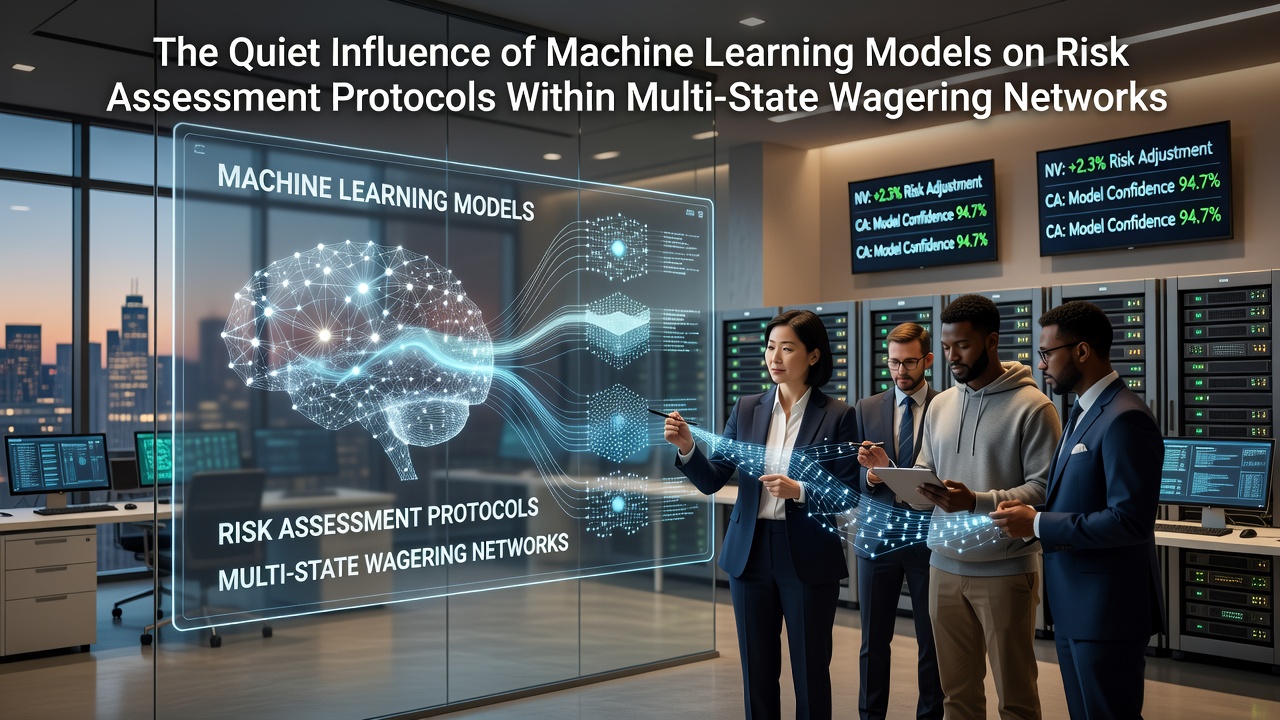 Multi-state wagering networks operate under a patchwork of regulations that differ from one jurisdiction to the next, and machine learning models now support risk assessment protocols by analyzing transaction patterns, player behavior, and compliance variables in real time. These systems process large volumes of data from operators licensed in states such as New Jersey, Pennsylvania, and Michigan, where each maintains distinct tax structures and responsible gaming requirements. Data from regulatory filings shows that operators began integrating supervised learning algorithms around 2023 to flag potential violations before they trigger audits, and by July 2026 several networks reported measurable reductions in manual review hours. The models typically rely on features that include deposit velocity, withdrawal frequency, and cross-state account linkages, which help identify accounts that may breach self-exclusion lists or exceed daily loss limits. Training datasets draw from anonymized historical records supplied by operators under data-sharing agreements approved by state commissions, and validation occurs through hold-out sets that test accuracy against known compliance cases. Observers note that ensemble methods combining gradient boosting with neural networks achieve precision rates above 92 percent on fraud detection tasks according to internal operator benchmarks shared during industry forums.
Integration Across Jurisdictional Boundaries
Operators running platforms in multiple states must reconcile varying rules on player verification, tax withholding, and advertising restrictions, so the models incorporate jurisdiction-specific rule engines that update when statutes change. For instance, when a state adjusts its required reserve ratios or modifies advertising disclosure language, the system retrains on new labeled examples to maintain alignment without requiring full code rewrites. This approach reduces the lag between regulatory updates and protocol adjustments, which previously stretched into weeks under manual processes.
One documented workflow involves streaming API calls from point-of-sale systems into a centralized feature store, where models score each session for risk level and route high-scoring events to compliance teams. The scoring incorporates state identifiers as categorical variables, allowing the same underlying model architecture to produce different risk thresholds depending on the licensing jurisdiction. Research conducted at the University of Nevada, Las Vegas, examined similar architectures and found that incorporating location-based features improved recall on multi-state exclusion violations by 18 percent compared with single-state baselines.
Data Sources and Model Training Practices
Training data originates from transaction logs, geolocation pings, and customer support tickets that have been stripped of personally identifiable information under protocols reviewed by state attorneys general. Operators augment these records with synthetic examples generated through techniques such as SMOTE to address class imbalance between compliant and non-compliant sessions. Continuous learning pipelines monitor model drift by comparing live predictions against eventual compliance outcomes, triggering retraining when accuracy drops below predefined thresholds.

External benchmarks published by the Nevada Gaming Control Board in its 2025 annual technology report indicate that licensees using machine learning for initial risk triage processed 37 percent more transactions per compliance officer than those relying solely on rule-based systems. The same report notes that false positive rates declined steadily as models incorporated additional features such as device fingerprinting and network latency patterns.
Operational Impacts on Compliance Teams
Compliance teams receive ranked alerts rather than exhaustive lists, which allows staff to focus investigative resources on cases the models assign higher priority scores. This triage method has led to documented increases in the proportion of alerts resulting in confirmed regulatory actions, rising from roughly 14 percent in 2022 to 29 percent in early 2026 according to aggregated operator disclosures. Teams also use model explanations generated through SHAP values to document decision rationales during audits, satisfying record-keeping requirements across states that mandate explainability for automated decisions.
Cross-state data sharing agreements now include clauses that permit federated learning setups, where models train on decentralized datasets without moving raw records between operators. This preserves privacy while still allowing the shared model to learn patterns that appear only when data from multiple jurisdictions is considered together. Participants in one pilot program covering Illinois, Indiana, and Iowa reported a 12 percent improvement in detection of coordinated bonus abuse schemes that spanned state lines.
Challenges and Ongoing Adjustments
Model performance can degrade when new game types or payment methods enter the market, because feature distributions shift and previously unseen patterns emerge. Teams address this through scheduled evaluation cycles and by maintaining diverse validation sets that include recent product launches. Regulatory bodies in several states have begun requesting model cards that summarize training data characteristics, performance metrics, and known limitations before approving new algorithmic deployments.
Hardware requirements for inference at scale remain modest for most operators, yet storage of audit trails and feature histories continues to grow, prompting investments in tiered data lakes that separate hot and cold records. Staff training programs now include modules on interpreting model outputs and recognizing when human override is warranted, particularly in edge cases involving vulnerable player populations.
Conclusion
Machine learning models continue to embed themselves into the operational backbone of multi-state wagering networks by supplying consistent, jurisdiction-aware risk scores that support both fraud prevention adn regulatory compliance. As additional states authorize sports wagering and online casino products, the volume of transactions requiring review grows, and automated systems provide the scalability needed to maintain oversight without proportional increases in headcount. Ongoing refinements to training pipelines and explainability tools will determine how effectively these models adapt to future regulatory changes and emerging product categories.